Social media gets a lot of attention, and for good reason.
It helps businesses stay visible, share updates, connect with their audience, and show personality. But social media should not be the only place your audience hears from you.
Algorithms change. Posts get missed. Reach can be unpredictable. Even loyal followers may not see every update you share.
That is one of the reasons email marketing still matters.
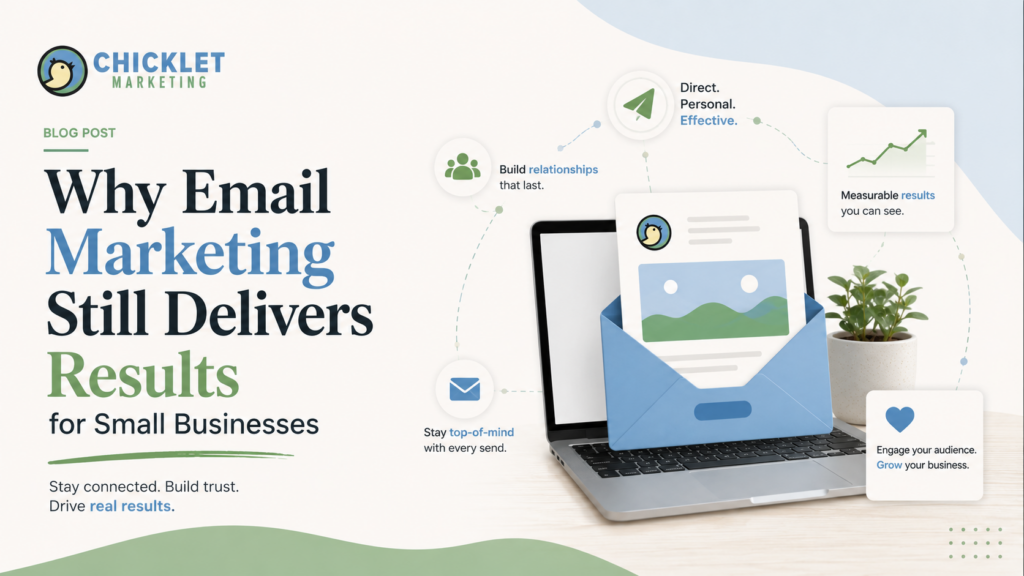
For small businesses, email remains one of the most practical and reliable ways to stay connected with customers, clients, supporters, and prospects. It gives you a direct line of communication with people who have already shown interest in your business.
A well-planned email newsletter does not need to be complicated. It simply needs to be useful, consistent, and aligned with your brand.
Here is why email marketing still delivers results for small businesses.
You Own Your Email List
One of the biggest advantages of email marketing is that your list belongs to your business.
Social media platforms are valuable, but you do not fully control them. Your account, reach, visibility, and audience access are all affected by platform rules and algorithms.
Your email list gives you a more direct way to communicate.
When someone subscribes to your newsletter, becomes a client, requests information, or chooses to receive updates from your business, they are giving you permission to stay in touch.
That is valuable.
It means you are not relying only on whether a social platform decides to show your post. You can send your message directly to the inbox of people who have already expressed interest.
Email Helps Keep Your Business Top-of-Mind
Not every customer is ready to buy, book, schedule, donate, or reach out today.
But that does not mean they will never need you.
Email marketing helps your business stay visible until the timing is right.
A monthly newsletter, seasonal update, or helpful email reminder keeps your name in front of your audience in a professional and consistent way. When they do need your services, your business is more likely to come to mind.
This is especially helpful for service-based businesses, nonprofits, consultants, retailers, restaurants, event venues, and organizations that rely on repeat engagement or referrals.
Consistency builds familiarity, and familiarity helps build trust.
Newsletters Give You a Place to Share More Than Promotions
A strong email newsletter is not just a sales flyer.
In fact, the best newsletters often include helpful, educational, or relationship-building content.
Your newsletter can include:
- Business updates
- Helpful tips
- Blog posts
- Upcoming events
- New services
- Seasonal reminders
- Project highlights
- Client stories
- Behind-the-scenes updates
- Community involvement
- Special offers
- Important announcements
This helps your audience feel informed and connected, not just sold to.
For example, a landscaping company might send seasonal maintenance reminders. A nonprofit might share volunteer opportunities and impact stories. A professional service provider might share educational tips. A boutique might feature new arrivals and upcoming events.
The content should match your business, your audience, and your goals.
Email Can Drive Traffic Back to Your Website
Your website is your main online home, and email marketing can help bring people back to it.
When you share a blog post, service page, event registration link, product page, portfolio update, or resource in your newsletter, you are creating a pathway back to your website.
That matters because your website is where people can learn more, take action, request information, schedule, shop, donate, or contact you.
Social media can also drive traffic, but email gives you another important channel to support that goal.
A simple newsletter feature with a button like “Read the Blog,” “Learn More,” “Schedule a Consultation,” or “View Upcoming Events” can help turn awareness into action.
Email Supports Relationship-Building
Marketing is not only about getting new leads. It is also about nurturing the relationships you already have.
Email gives you a way to continue the conversation with people who know your business.
That may include current clients, past clients, referral partners, donors, volunteers, prospects, members, or community connections.
A thoughtful newsletter reminds people that your business is active, helpful, and available. It gives them something useful to read, something to remember, or something to share with someone else.
Over time, those small touchpoints add up.
People may forward your newsletter, reply with a question, click to read more, remember you for a referral, or reach out when they are ready.
Email and Social Media Work Better Together
Email marketing and social media do not need to compete. They work best when they support one another.
Social media is great for visibility, engagement, and quick updates. Email is great for more direct communication, deeper information, and driving people back to your website.
The same topic can often be used across both channels in different ways.
For example, one blog post could become:
- A newsletter feature
- A Facebook post
- A LinkedIn post
- An Instagram graphic
- A short video idea
- A website resource
When your marketing channels work together, your message becomes stronger and more consistent.
Someone may see your post on social media, then receive your newsletter a few days later, then click through to your website. Each touchpoint reinforces the others.
That is how consistent marketing builds recognition.
Email Is Useful for More Than Large Companies
Some small business owners assume email marketing is only for large companies, online retailers, or businesses with huge mailing lists.
That is not true.
You do not need thousands of subscribers to benefit from email marketing. A smaller, engaged list can still be very valuable.
If your audience includes people who know you, have worked with you, have asked for information, attended an event, signed up for updates, or are interested in what you offer, email can help you stay connected.
The goal is not always to send emails to the largest possible list.
The goal is to send the right message to the right audience consistently.
A Monthly Newsletter Can Be Enough
Email marketing does not have to be overwhelming.
For many small businesses, a simple monthly newsletter is a great place to start.
A monthly newsletter gives you a consistent touchpoint without requiring constant email creation. It can be simple, helpful, and repeatable.
A basic monthly newsletter might include:
- A short introduction
- One featured blog post or helpful tip
- A company update
- A service reminder
- An upcoming event or promotion
- A clear call-to-action
- Links to your website and social platforms
This gives your audience something useful while keeping your business visible.
The key is consistency. You do not need to send emails every week if that is not realistic. A thoughtful monthly email can still make an impact.
Email Helps You Share Important Updates
There are some updates that should not rely only on social media.
For example:
- Changes to hours
- Upcoming closures
- Important deadlines
- Event details
- New services
- Policy updates
- Security notices
- Seasonal reminders
- Registration announcements
- Product launches
Posting on social media is helpful, but not everyone will see it. Email gives you a more direct way to communicate information that matters.
This is especially important for businesses and organizations that serve clients, members, donors, customers, or patients who need timely information.
Strong Emails Feel Like Your Brand
Just like your website and social media, your email marketing should feel like your business.
That means your newsletters should use consistent branding, colors, tone, messaging, and calls-to-action.
A polished email reinforces your credibility. It shows that your business is organized, professional, and intentional about communication.
The writing should sound natural. The design should be easy to read. The content should feel relevant to the audience.
Email marketing is not just about sending something out. It is about sending something that supports the way people experience your brand.
What Should Small Businesses Send?
If you are not sure what to include in an email newsletter, start with what your audience would actually find helpful.
Good newsletter topics often come from:
- Common customer questions
- Seasonal reminders
- Business updates
- New blog posts
- Service explanations
- Upcoming events
- Helpful checklists
- Community involvement
- Client success stories
- Behind-the-scenes insights
You do not have to overcomplicate it. The best email topics are often the ones that answer a question, solve a small problem, provide a reminder, or help people feel more connected to your business.
Final Thoughts
Email marketing is still one of the most valuable tools small businesses can use to stay connected.
It gives you a direct way to reach your audience, share helpful information, drive traffic to your website, and keep your business top-of-mind.
Social media is important, but it should not be your only communication channel. When email, social media, website content, and branding work together, your marketing becomes more consistent and more effective.
A simple monthly newsletter can help your business stay visible, build trust, and create meaningful touchpoints with the people who matter most.
At Chicklet Marketing, we help small businesses create email newsletters and marketing content that feel polished, consistent, and connected to the bigger picture. Whether you need help writing, designing, scheduling, or building a stronger communication strategy, we can help your business stay in front of your audience in a way that feels clear and professional.