
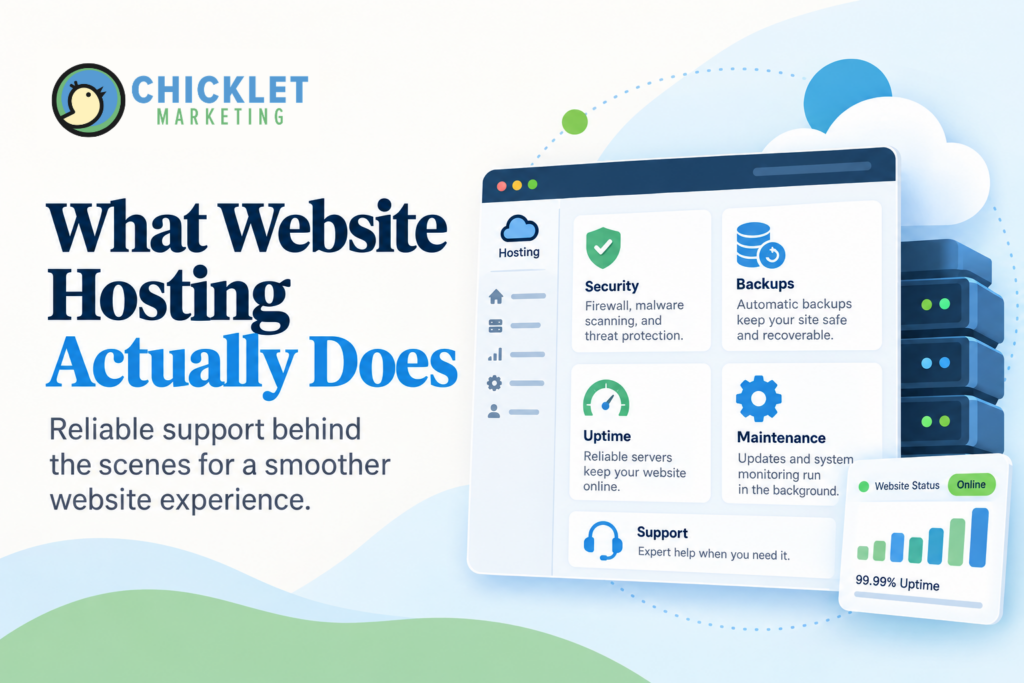
Website hosting is one of those services that is easy to overlook when everything is working properly.
You open your website, the pages load, customers can access the information they need, and business continues as usual. Behind that seemingly simple experience, however, there is infrastructure keeping your website available online.
For small-business owners, understanding website hosting does not require becoming a technical expert. But knowing what your hosting does, and what good hosting support should provide, can make it easier to understand why it matters to your website and your business.
First, What Is Website Hosting?
Every website needs somewhere to live.
Your website consists of files, images, databases, code, and other information that needs to be stored on a server. Website hosting provides the server environment that allows people to access that information when they type in your domain name or click a link to your site.
Think of your domain name as the address customers use to find you and hosting as the space where your website actually resides.
There is also another important piece connecting the two: DNS, or the Domain Name System.
DNS acts like a set of directions for your domain name, telling internet traffic where your website, email, and other online services should go. Proper DNS management helps ensure that visitors reach the correct website and that other services connected to your domain continue working as expected.
Hosting, your domain name, and DNS all work together behind the scenes to make your website accessible.
Without hosting, your website cannot be available online.
But not all hosting arrangements provide the same level of service, management, or support.
Hosting Is About More Than Keeping a Website Online
Availability is certainly important. If customers cannot access your website when they need it, they cannot read about your services, fill out a contact form, make a purchase, or take whatever next step your site is designed to support.
Reliable website hosting is also connected to other parts of the online experience, including performance and security.
A website that loads slowly or experiences frequent disruptions can frustrate visitors. A hosting environment that is not properly managed can also leave business owners responsible for technical tasks they may not have the time or expertise to handle.
That is where managed website hosting can make a difference.
What Is Managed WordPress Hosting?
Managed hosting adds ongoing support around the technical side of keeping your website online.
Instead of handing a business owner server space and leaving the rest to them, managed hosting can include services such as DNS management, backups, security measures, SSL certificate management, software updates, and technical support.
For a WordPress website, that ongoing attention is particularly valuable because WordPress sites rely on a combination of the WordPress core software, themes, plugins, and other components.
Those pieces are updated over time. They can occasionally conflict with one another or develop vulnerabilities. Regular attention helps keep the overall website environment healthier.
Backups Give You a Way Back
A backup is easy to appreciate once you need one.
Website changes do not always go according to plan. An update may create an unexpected issue. Content can accidentally be changed or removed. A technical problem can affect part of the site.
Regular website backups preserve copies of your site that can be used for restoration when necessary.
For a business owner, that means a website issue does not necessarily mean rebuilding lost work from scratch.
Backups are one of those behind-the-scenes safeguards that customers will probably never notice, but they are an important part of responsible website management.
Security Requires Ongoing Attention
Small-business websites are not automatically too small to attract unwanted activity.
WordPress itself is actively maintained, but outdated software, themes, or plugins can create vulnerabilities. Keeping WordPress, themes, and plugins current, using SSL, and following good security practices can help reduce unnecessary exposure.
An SSL certificate also enables the secure HTTPS connection visitors expect to see when browsing modern websites. While an SSL certificate is only one piece of website security, keeping it properly configured and current is an important part of maintaining a professional online presence.
Security is not a one-time checkbox completed when a website launches. It requires continued attention as technology changes.
Updates Keep the Pieces Working Together
If you have ever ignored an update notification on your phone or computer, you already understand how easy it is to put software updates off.
A business website is no different.
WordPress, themes, and plugins receive updates for a variety of reasons. Some address security concerns. Others fix bugs, improve functionality, or maintain compatibility with newer versions of other software.
The challenge is that website updates sometimes affect other parts of the site. Simply clicking every available update without considering compatibility is not always the best approach.
Ongoing website maintenance provides a more deliberate process for keeping those components current while watching for problems.
Support Matters When Something Goes Wrong
The real value of reliable website support often becomes clearest when there is a problem.
If a page suddenly stops displaying correctly, a form is not working, or an update creates an unexpected issue, knowing who to contact can save a business owner from spending hours trying to troubleshoot something outside their area of expertise.
For many small businesses, that peace of mind is an important part of managed hosting.
Your time is better spent serving customers and running your business than trying to determine why a WordPress plugin suddenly stopped cooperating.
Why a Local Hosting Provider Can Make a Difference
There is a difference between purchasing hosting from a large platform and working with a local provider that actually helps manage your website environment.
With many large hosting companies, business owners are still responsible for navigating account settings, DNS records, software updates, support tickets, and technical issues on their own. When something goes wrong, support may mean starting over with a new representative each time or trying to explain your website setup to someone who has never worked with your business before.
A local managed hosting provider offers a more personal level of support.
At Chicklet Marketing, we know the websites we host, understand how they are set up, and can help manage the technical pieces surrounding them, including hosting, DNS, SSL, backups, WordPress updates, and ongoing maintenance.
For a small business owner, that means there is a familiar team to contact when something needs attention instead of trying to navigate a large hosting platform alone.
Hosting Should Support the Website You Depend On
Your website may be responsible for generating leads, answering customer questions, supporting sales, showcasing your work, or simply giving potential customers confidence that they have found the right business.
Whatever role it plays, it needs a reliable foundation behind it.
Website hosting may never be the most visible part of your marketing, and that is exactly the point. When hosting, maintenance, security, backups, and updates are being handled properly, they quietly support everything customers actually see.
At Chicklet Marketing, our managed WordPress hosting and maintenance services are designed to take those technical responsibilities off business owners’ plates. From hosting and DNS management to backups, SSL certificates, WordPress updates, and ongoing technical support, we handle the behind-the-scenes care that helps keep websites secure, updated, accessible, and ready for the customers who rely on them.
Your hosting may work behind the scenes, but the experience it supports is front and center every time someone visits your website.